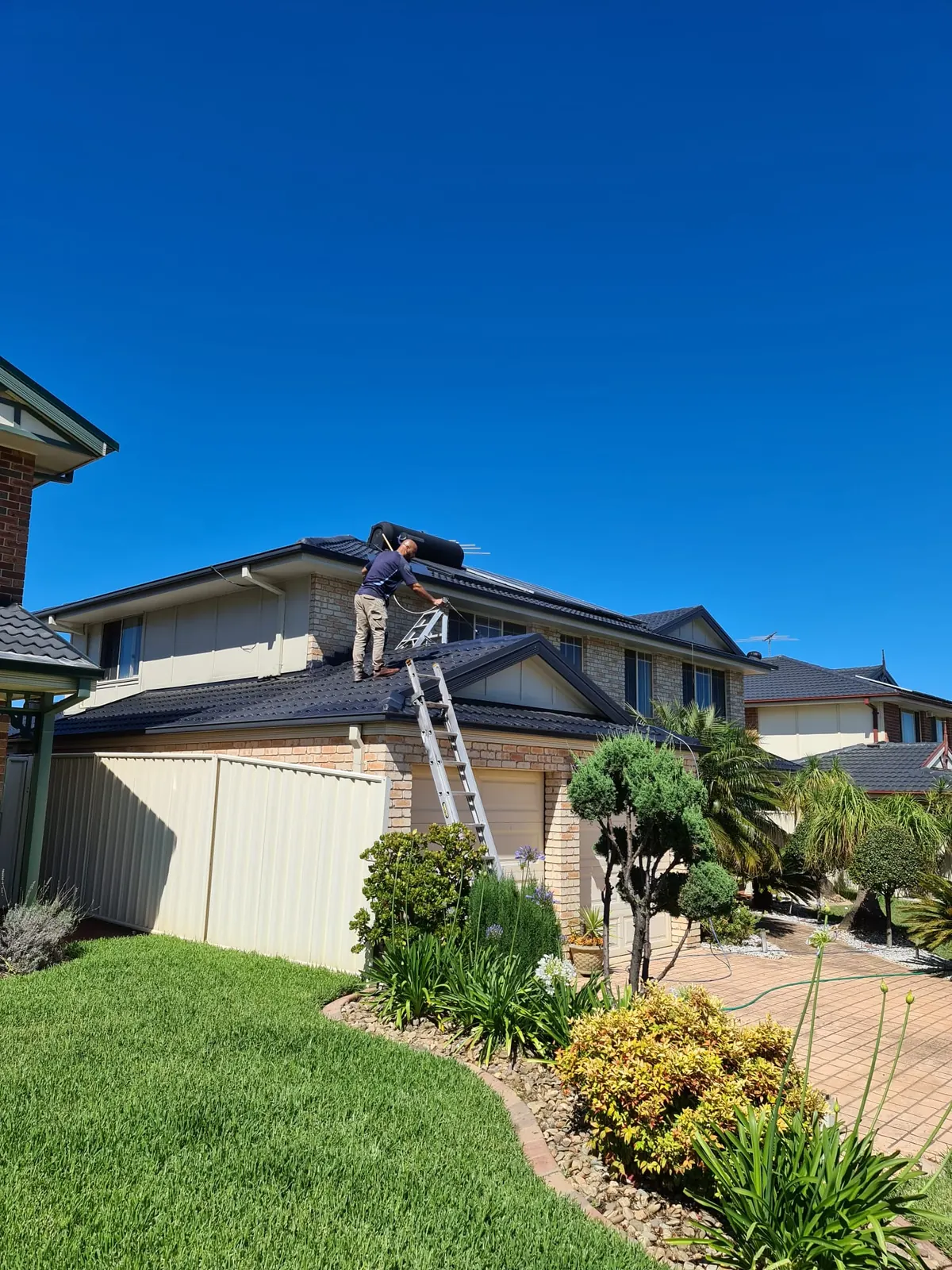
Painting is one of the easier trades to enter and one of the harder ones to judge. Anybody can buy a brush, and on handover day almost any paint job looks good. The differences show up at year three, when one wall is still crisp and another is flaking at the skirting line. Since you cannot inspect the future, the next best thing is to ask the right questions before you hire. These twelve will tell you most of what you need to know, and there is not a trick among them: a good painter will answer all of them comfortably.
Before you call anyone
Two things make every subsequent conversation more productive. First, know your scope. Walk through and decide what is actually included: which rooms, whether ceilings are in, whether trim and doors are in, whether the garage counts. Vagueness at this stage is the main reason quotes come back non-comparable.
Second, know your rough budget range. You do not have to disclose it, but knowing it lets you rule out quotes that are never going to work and have an honest conversation about staging the job instead. Our Sydney house painting cost guide gives you realistic numbers to anchor on.
The 12 questions
1. Are you licensed, and what is your licence number?
In New South Wales, residential painting work valued over $5,000 including materials requires a contractor licence from NSW Fair Trading. The licence number should be on the quote, and you can verify it yourself on the Fair Trading website in about a minute. A painter who is reluctant to give you a number is telling you something important.
2. Do you have current public liability insurance?
Ask for a certificate of currency, not a verbal yes. Public liability covers damage to your property and injury to third parties. If a ladder goes through a window or a spray drift lands on the neighbour's car, this is what stands between you and a dispute. If the painter has employees, workers compensation cover is also required.
3. Who will actually be on site?
Sometimes the person quoting is the person painting. Sometimes they run a crew, and sometimes the work is subcontracted out entirely. None of those is wrong, but you should know, because it determines who is accountable for the quality and whether the standards you agreed on will be communicated to the people holding the brushes.
4. How many coats are included, and on which surfaces?
This is the single most revealing question in the list. The answer should be specific: primer or sealer where required, two topcoats on walls, two on ceilings, two on trim. If the answer is a vague "we'll do what it needs", press for a written number. Our article on how many coats each surface genuinely needs explains why this is where quotes diverge most.
5. What preparation is included?
Get it itemised: washing, filling, sanding, caulking, mould treatment, rust treatment, spot priming, timber repairs. Preparation is typically 40 to 60 per cent of the labour on a repaint and it is the invisible part of the job, which makes it the easiest thing to quietly omit.
6. Which products are you using, exactly?
Brand, product name and sheen level for each surface. "Quality trade paint" is not an answer. A painter who knows their products will name them without hesitation and will usually explain why they have chosen that particular line for your substrate. If you want background on the options first, our comparison of the major Australian paint brands is a useful primer.
7. Can I see recent work like mine?
A weatherboard exterior is a different skill set from a high-end interior or a heritage restoration. Ask to see examples comparable to your job, and ideally one you can look at in person or in detailed close-up photographs. Wide shots taken on handover day hide a lot; a photograph of a cut-in line or a door edge tells you far more.
8. What is not included?
This question saves more arguments than any other. Common quiet exclusions are ceilings, wardrobe interiors, the garage, the underside of eaves, gutters and downpipes, security doors, and any repairs discovered during preparation. Ask the painter to state the exclusions explicitly on the quote.
9. How long will it take, and when can you start?
You want a realistic day count, not the shortest possible one. A painter who quotes four days on a job that plainly needs eight is either going to cut coats or leave you half-finished while they start the next job. Our guide to realistic painting timelines gives you a benchmark to sanity-check the answer against.
10. What warranty do you offer on the workmanship?
There are two separate warranties in play: the paint manufacturer's product warranty, and the painter's own workmanship warranty. The second is the one that matters when a coating lifts because the surface was not prepared properly. Ask for the term, what it covers, and get it in writing.
11. What are the payment terms?
NSW caps deposits on residential building work: 10 per cent for work at or under $20,000, and 5 per cent above that. Progress payments tied to completed stages are normal on larger jobs. Large cash sums demanded upfront, or pressure to pay before any work has started, are among the most reliable warning signs there is.
12. How do you handle problems and touch-ups?
Every job has something: a missed spot, a mark on a floor, a colour that reads differently on the wall than on the card. What you want to know is the process. Does the painter do a formal walk-through with you at the end? Will they come back for touch-ups? A confident answer here is one of the better signals of a professional outfit.
Quote comparison checklist
Once the quotes arrive, lay them side by side against these items. If any cell is blank, go back and ask.
| Item | What you want to see |
|---|---|
| Licence number | Stated on the quote and verifiable |
| Insurance | Certificate of currency provided |
| Surfaces included | Listed room by room or elevation by elevation |
| Preparation | Itemised, not summarised in one word |
| Products | Brand, product name and sheen per surface |
| Coat count | Stated separately for walls, ceilings and trim |
| Exclusions | Written out explicitly |
| Timeline | Start date and realistic duration |
| Warranty | Term and scope of workmanship cover |
| Payment terms | Deposit within legal limits, staged payments |
| Total price | Clear, with GST status stated |
Warning signs worth walking away from
- No written quote. A number scribbled on the back of a card is not a contract.
- Cash only, no invoice, no GST. You have no recourse and no record if something goes wrong.
- Pressure to decide today. "This price is only good if you sign now" is a sales tactic, not a trade practice.
- Large upfront payment. Especially if it exceeds the NSW deposit limits.
- No licence number offered. On a job over $5,000, this is not optional in NSW.
- Door-knocking with a story about leftover paint. Legitimate painters do not have surplus tinted paint from a nearby job that happens to match your house.
- Reluctance to name products. Anyone who paints for a living knows what is in their van.
- A quote dramatically below everyone else. Not automatically disqualifying, but always worth interrogating line by line.
- No fixed address or ABN you can verify. Check the ABN lookup; it takes thirty seconds.
- Reviews that all read the same way and arrived in the same week. Look for detail and for how negative feedback was handled.
Finding candidates in the first place
Sydney has a very large number of painters, which is both an advantage and a problem. These sources tend to produce better shortlists than a cold search:
- Neighbours and word of mouth. Still the best source. If a house on your street has been painted recently and looks good, knock on the door and ask who did it.
- Local community groups. Suburb-based social media groups generate honest, specific recommendations and the occasional useful warning.
- Paint trade centres. Staff at trade counters know which painters buy premium products and which buy the cheapest tin on the shelf. It is a genuinely informative question to ask.
- Your own neighbourhood. A painter who works regularly in your part of Sydney knows the local housing stock, whether that is coastal weatherboard, inner-city terraces or brick and render out west. Our areas we serve page sets out where our own crews work.
- Existing trades you trust. Builders, plasterers and property managers work alongside painters constantly and have strong opinions.
Local knowledge genuinely matters in Sydney
Painting across Sydney is not one job. Coastal properties on the eastern beaches and up the northern peninsula need coatings and preparation that account for salt exposure and constant moisture. Western and north-western suburbs deal with more extreme summer heat and greater thermal movement in render and cladding. Inner-city terraces and semis are frequently older stock with lath and plaster, original joinery and lead paint under the top layers, which changes the preparation method entirely.
A painter who has worked across greater Sydney for years will identify which of those categories your home falls into within a few minutes of walking around it, and will spec accordingly. That is the difference between a coating that lasts a decade and one that lasts four years. It is also why we specify the systems set out on our materials page rather than applying one approach everywhere.
Getting the most out of the painter you choose
- Confirm colours early. Indecision at the tinting stage delays jobs and irritates crews.
- Clear rooms and access in advance. Our checklist for getting your home ready covers exactly what helps.
- Agree on communication. One point of contact and a daily check-in beats ad-hoc messages.
- Raise concerns immediately. A problem flagged on day two is easy to fix; the same problem raised at final payment is a dispute.
- Do the final walk-through properly. In daylight, at an angle, with the painter present.
- Keep the paperwork. Quote, invoice, warranty, product names and batch numbers for future touch-ups.
Frequently Asked Questions
Do painters need a licence in NSW?
Yes. In New South Wales, residential painting and decorating work valued above $5,000 including materials requires a contractor licence issued by NSW Fair Trading. You can verify any licence number free of charge on the Fair Trading website before signing anything.
How many quotes should I get for a painting job?
Three is the practical sweet spot. It gives you a sense of the fair market range without dragging the process out for weeks. Make sure all three are quoting identical scope, including coat count and preparation, or the comparison tells you nothing useful.
Is the cheapest painting quote ever the right choice?
Occasionally, if the painter simply has a gap in their schedule or lower overheads. Far more often a quote well below the others is a narrower scope: fewer coats, less preparation, or cheaper paint. Compare the written scope line by line before deciding.
How much deposit should I pay a painter?
In NSW, the maximum deposit for residential building work over $20,000 is 5 per cent, and 10 per cent for work at or under that figure. Many painters take no deposit at all on smaller jobs. Requests for large upfront payments in cash before any work begins are a clear warning sign.
What insurance should a painter have?
Public liability insurance is the essential one, covering damage to your property or injury to others. If the painter has employees, workers compensation is also required. Ask to see current certificates of currency rather than accepting a verbal assurance.
Should a painting quote be in writing?
Always. A written quote should list the surfaces included, the preparation, the primer and topcoat products, the number of coats, the timeline, the price and any exclusions. Verbal agreements leave you with no reference point if expectations diverge later.
What warranty should I expect on painting work?
Reputable painters commonly offer a workmanship warranty in the range of five to seven years on residential work, separate from the paint manufacturer's own product warranty. Get the term and what it covers in writing, because the two warranties are not the same thing.
How do I check a painter's previous work?
Ask for recent examples of jobs comparable to yours and, ideally, one you can look at in person or in detailed photographs. Read reviews across more than one platform and look for consistency in how problems were handled rather than only at the star rating.
Ask us all twelve
We would genuinely rather be asked these questions than not. A homeowner who knows what to look for is easier to work with, because the conversation is about the actual job rather than about trust. Our quotes state the licence number, name every product, list the coat count per surface and set out the exclusions, and we are happy to walk you through any of it before you commit to anything.
Ready to compare properly? Request a free quote and we will put the full scope in writing. You can see the range of work we take on, from single rooms to full exterior repaints and commercial projects across Sydney.