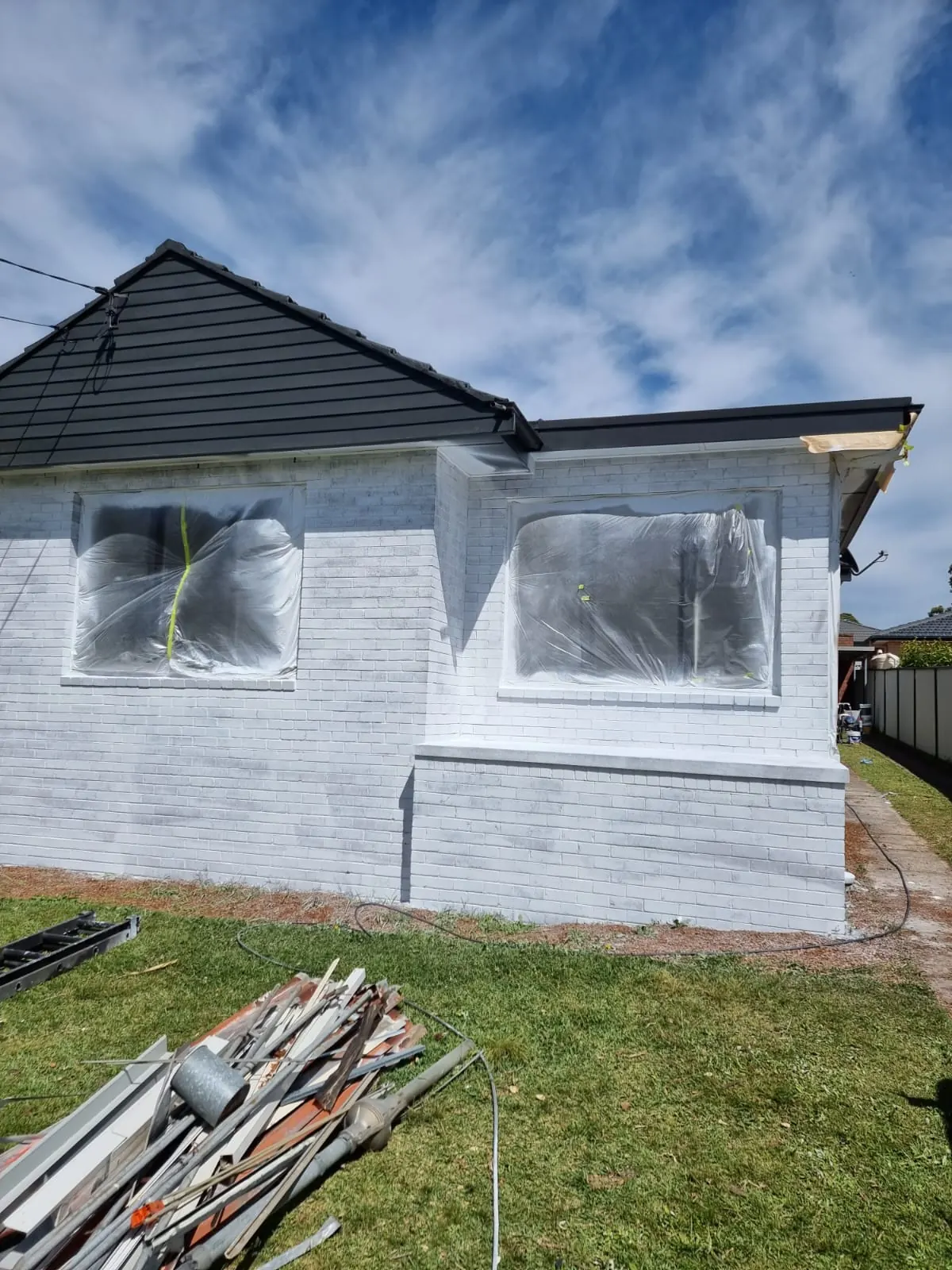
It is one of the first things most homeowners want to know, and understandably so. There is no universal price for painting a Sydney home because every property has different surfaces, access and preparation requirements. What we can do is explain the main things that affect the final cost and give you a realistic idea of the price ranges seen across Sydney, helping you budget before the work begins.
What Determines the Cost of Painting?
Two similar homes can still receive noticeably different painting quotes. Before judging the numbers, it is worth understanding exactly what the painter is allowing for.
- Amount of surface to paint. A home with high ceilings, large walls and extensive trim can require considerably more paint and labour than its floor size suggests.
- Surface condition and prep work. Cracks, peeling coatings, water marks and older surfaces can require additional filling, sanding, sealing or priming before painting begins.
- Coat requirements. Major colour changes, uneven surfaces and previously painted areas may require a primer or additional coats to achieve an even result.
- Access and height. Multi-storey homes, steep blocks, narrow side access and difficult areas can require specialist equipment, scaffolding or elevated platforms.
- Choice of paint. Higher-quality washable and weather-resistant products generally cost more initially, but can provide better coverage, durability and longevity.
Typical Sydney painting price ranges in 2026
These are indicative figures for professional, fully prepared work by a licensed painter. Treat them as a starting point, not a fixed quote.
| Job | Typical range | Notes |
|---|---|---|
| Single bedroom (walls) | $450 to $900 | Depends on ceiling height and prep |
| Living or open-plan area | $1,000 to $2,500 | Walls, ceiling and trim |
| Full interior, 3 bed home | $6,000 to $12,000 | Walls, ceilings, doors and skirtings |
| Full exterior, single storey | $8,000 to $16,000 | Varies with cladding and access |
| Full exterior, double storey | $12,000 to $25,000+ | Scaffolding and height add cost |
| Roof respray | $3,000 to $7,000 | Cleaning, repairs and coating |
Why Sydney Properties Can Be Different
Sydney's housing stock varies enormously from suburb to suburb, and that can influence the work involved. Federation and Victorian terraces in the Inner West often feature detailed timberwork, rendered surfaces and heritage considerations. Weatherboard homes around the Northern Beaches need careful timber preparation and products suited to salty coastal air. Modern rendered properties across the North Shore and Hills District can require flexible coatings that move with the surface.
The local climate also plays a role in exterior costs. Strong sunlight, humidity and coastal exposure can gradually wear down paint systems, making thorough preparation particularly important. Cutting back on preparation or using unsuitable products may save money initially but can lead to earlier maintenance and repainting. If you would like a closer look at how outdoor work is approached, our exterior house painting service explains the process in detail.
Interior versus exterior budgets
Interior painting is often easier to estimate because the environment is protected from weather and access is usually simpler. Costs can still change depending on ceiling heights, detailed trim, cabinetry and feature walls. For homeowners updating gradually, rooms can also be completed in stages to minimise disruption. If you are refreshing rooms one at a time, our interior painting team can stage the work to suit your household.
Exterior painting involves more variables, including weather, working height, surface repairs and the condition of fascias, gutters and other exposed areas. It can require a larger budget, but a properly completed exterior also provides an important layer of protection against Sydney's weather.
How to compare quotes fairly
The lowest price is not necessarily the best overall deal. When comparing painters, look beyond the final figure and make sure you understand exactly what each quote covers.
- Is the preparation work clearly listed, or simply assumed?
- How many coats are included, and what type and quality of paint will be used?
- Does the painter hold the appropriate licence and insurance?
- Is the quoted price fixed in writing, or could additional costs be added later?
A detailed written quote makes it much easier to compare painters on an equal basis. For homeowners throughout the Eastern Suburbs and wider Sydney, knowing exactly what is included can provide just as much value as finding the right price.
Where the Money Actually Goes
A painting quote can look like a single lump sum, but it is really four different costs bundled together. Knowing the rough split makes it far easier to judge whether a number is plausible.
| Cost component | Share of the quote | What it covers |
|---|---|---|
| Labour | Roughly 60 to 70 per cent | Preparation, masking, cutting in, application, clean-up |
| Materials | Roughly 15 to 25 per cent | Primers, topcoats, fillers, sealants, sheeting, tape, abrasives |
| Access equipment | 0 to 15 per cent | Scaffolding, elevated work platforms, edge protection |
| Overheads and margin | Remainder | Licensing, insurance, vehicles, warranty, administration |
Because labour dominates, anything that adds hours adds cost far faster than upgrading the paint does. Stepping up from a mid-range to a premium topcoat across a three-bedroom interior might add $400 to $700 in materials. Discovering that every wall needs two rounds of filling and sanding can add several thousand in labour. That imbalance is the key to reading a quote sensibly.
Why the cheapest quote is often the most expensive
When one quote lands dramatically below the others on the same house, the saving is almost never efficiency. It comes out of the two invisible line items: preparation hours and coat count. Both look identical on handover day. Neither looks identical in three years, when you are paying again for a job you thought was done. Our breakdown of how many coats each surface genuinely needs explains why that second topcoat is the line most worth protecting.
Cost Factors Specific to Sydney Properties
Access and height
Access is the most underrated cost driver in Sydney. A single-storey home with clear flat access on all four sides is straightforward. The same floor area on a steep block, with a retaining wall on one side and a 900mm gap to the neighbouring fence on the other, can add 30 to 50 per cent to the exterior figure. Scaffolding on a two-storey property commonly runs into the low thousands before a brush is lifted, and that cost is largely fixed regardless of how much wall sits behind it.
Building age and substrate
Sydney's housing stock spans well over a century, and age drives preparation. A home built in the last fifteen years usually has sound render and plasterboard that needs washing and spot filling. A Federation or interwar home may have layered coatings of unknown compatibility, deteriorated putty around window glazing, detailed timber fretwork that has to be worked by hand, and lead-based paint in the older layers. That last one is a genuine cost and safety consideration: any surface painted before 1970 should be treated as suspect and handled accordingly.
Strata, terraces and shared walls
Terraces and semi-detached homes across the inner suburbs bring their own costs. Street frontages often require permits or traffic management for scaffolding, work may need to be scheduled around neighbours, and heritage controls can restrict colour choices or require like-for-like finishes. Strata properties add approvals and, frequently, out-of-hours work. None of it is unusual, but it belongs in the quote rather than appearing as a variation later. Similar considerations apply to shopfronts and offices, which our commercial painting team handles regularly.
How to Reduce the Cost Without Reducing the Quality
There are sensible ways to bring a painting budget down, and they all involve reducing scope or labour rather than cutting corners on the coating system.
- Stage the work. Do the interior this year and the exterior next, or the main living areas first. Each stage gets done properly and the cost spreads across two budgets.
- Keep the ceilings. Ceilings in good condition can often be left. Painting walls and trim only can take a meaningful slice off an interior quote.
- Reduce the colour change. Staying in a similar colour family avoids extra coats and tinted undercoats. Going from charcoal to white is genuinely more expensive work.
- Clear the rooms yourself. Moving furniture and taking down artwork before the crew arrives removes setup hours. Our preparation checklist covers what actually helps.
- Book outside the peak. Autumn and spring are the busiest exterior months across Sydney. Flexibility on timing can occasionally buy you a better rate.
- Bundle adjoining work. Doing the roof at the same time as the exterior shares the access and setup cost rather than paying for it twice.
What is not worth cutting: the primer where a surface needs it, the second topcoat, and the preparation. Those three decide whether you repaint in five years or twelve.
Where a higher spend genuinely pays back
Premium products are not always worth the premium, but there are specific situations where they are. High-wear interiors such as hallways and children's bedrooms benefit from a washable low-sheen that survives cleaning. Sun-punished north and west elevations and coastal walls benefit from better UV and salt resistance, because the coating is under attack from day one. Wet areas benefit from proper moisture-resistant products. Guest bedroom ceilings do not need any of it. Spending selectively beats spending uniformly, and our materials page sets out which systems we specify where.
Payment Terms, Variations and What to Get in Writing
In New South Wales, residential work above a set threshold requires a written contract with a licensed painter, and progress payments should be tied to stages of work rather than paid as a large sum up front. A modest deposit is normal. A request for half the job value before anyone has arrived is not.
A quote worth comparing states the following in writing:
- Every surface included, and explicitly what is excluded.
- The preparation method for each substrate, not just the word "prep".
- Named primer and topcoat products, sheen levels, and the number of coats per surface.
- Who supplies access equipment and whether that cost is included.
- The licence number, insurance details and the workmanship warranty period.
- How variations are priced and approved if hidden damage appears once preparation starts.
That last point matters more than people expect. Rot behind a fascia or a failed previous coating cannot always be seen at quoting stage. A fair contract says how such a discovery is priced, so it becomes a documented decision rather than an argument. The questions worth asking before you sign are covered in our guide to choosing a painter you can rely on.
Frequently Asked Questions
How much does it cost to paint a 3 bedroom house in Sydney?
For a full interior repaint including walls, ceilings, doors and skirtings, expect roughly $6,000 to $12,000 for professional work with proper preparation. A full single-storey exterior typically runs $8,000 to $16,000 depending on cladding and access. Doing both together often costs slightly less than two separate projects because setup and travel are shared.
Why do painting quotes for the same house vary so much?
Almost always because of preparation hours and coat count, which are the two things you cannot see on handover day. One quote may include a primer and two full topcoats over properly filled and sanded walls, while the other includes one coat over a quick wash. Comparing prices is only meaningful once both quotes specify the same scope.
Is it cheaper to paint a house yourself in Sydney?
On materials alone, yes, since labour is roughly 60 to 70 per cent of a professional quote. But you take on equipment hire, access risk at height, and the real chance of a finish that needs redoing. DIY makes most sense on a single interior room at ground level, and least sense on a two-storey exterior or a roof.
Do painters charge per square metre or per hour in Sydney?
Most residential painters quote a fixed price for the whole job rather than an hourly or per-square-metre rate, because preparation varies so much between properties. Some use a square-metre rate internally to build the estimate. What matters to you is a fixed written figure with the scope clearly defined, not the method used to reach it.
How much deposit should I pay a painter?
A modest deposit is normal, with the balance tied to stages of work or completion. In New South Wales, residential work above a set threshold requires a written contract with a licensed painter and progress payments linked to work performed. Be cautious of any request for a large upfront sum before the crew has arrived on site.
Does painting a house add value before selling?
A fresh, neutral repaint is one of the more cost-effective pre-sale improvements because it photographs well and reads as a well-maintained home at inspections. The best return usually comes from the front elevation, the entry and the main living areas rather than attempting the entire property.
Is scaffolding included in a painting quote?
It should be stated either way. On a two-storey Sydney home, scaffolding or an elevated work platform can add a meaningful amount, and that cost is largely fixed regardless of the wall area behind it. Always confirm who supplies the access equipment and whether hire and erection are inside the quoted figure.
How much does paint itself cost for a whole house?
Materials are typically 15 to 25 per cent of the total, which for a three-bedroom interior often means several hundred to a couple of thousand dollars including primers, fillers and sundries. Upgrading to a premium topcoat across that interior might add $400 to $700. It is a small lever compared with the labour that preparation adds.
Getting an accurate figure for your home
Online calculators and rough pricing guides can help you establish an initial budget, but they cannot account for the condition and layout of your individual property. The most reliable way to price the work is for a painter to inspect the home, measure the surfaces and assess the preparation required before providing a detailed quote.
If you are ready to move from a rough estimate to an exact figure, we can help. Request a free, no-obligation quote and we can arrange a convenient time to inspect the property, discuss your options and provide a clear fixed price in writing.