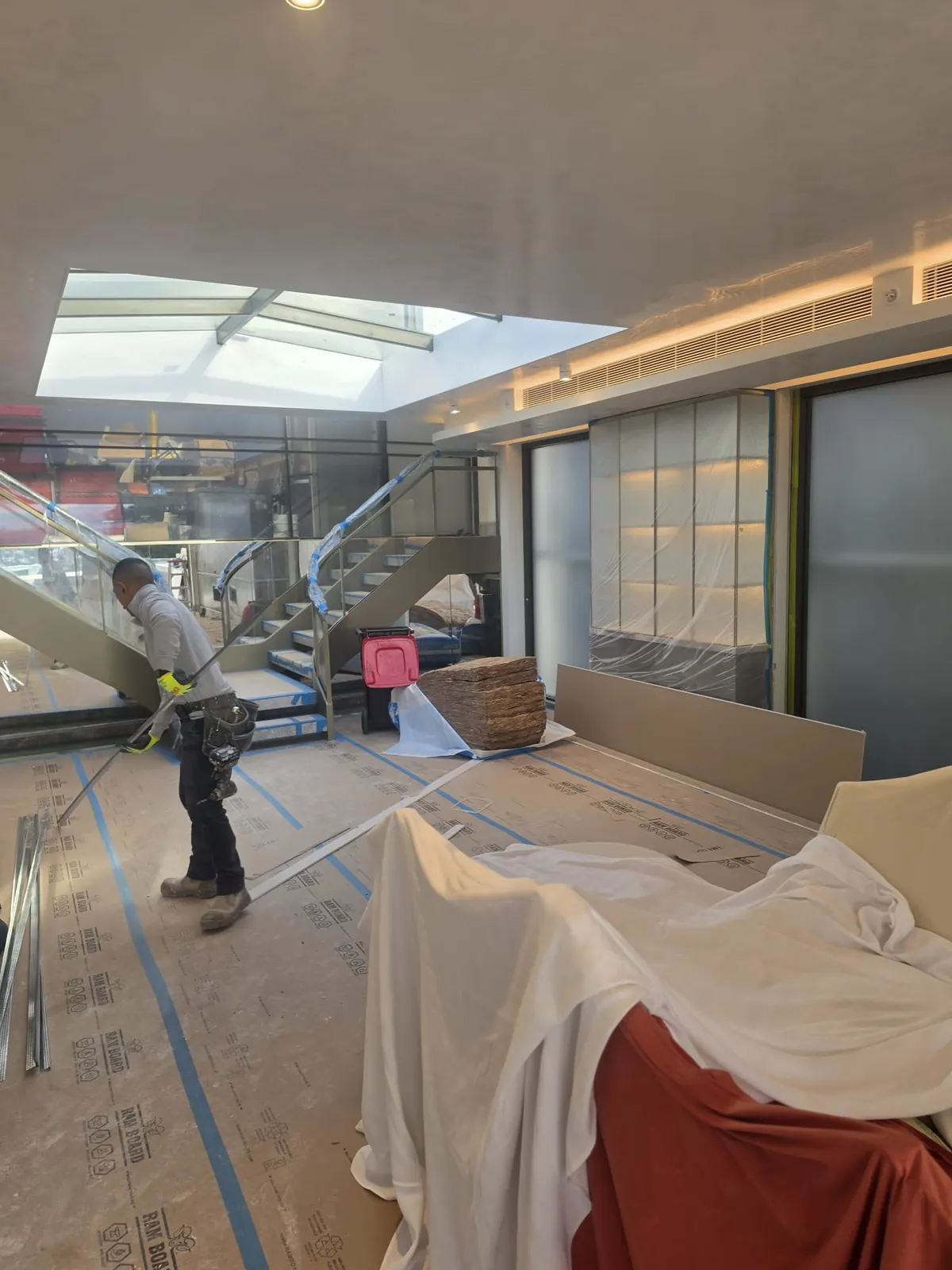
Our painting team will take care of protecting your home, including drop sheets, coverings and masking. A little preparation beforehand can still make the process faster and easier. Clearing the work areas and putting away valuables gives the painters more room to work and helps keep your belongings safe throughout the project.
Clear the Work Areas
Giving your painters plenty of space is one of the best ways to prepare. Clear areas allow easier access to walls and ceilings, speed up setup and help the team work safely and efficiently.
- Move smaller furniture, lamps, rugs and side tables out of the rooms being painted.
- If larger furniture cannot be removed, move it towards the centre of the room. Your painting team can help with heavier items and will protect them with appropriate coverings.
- Remove photos, artwork, mirrors and wall hangings from the walls, along with any unwanted hooks or fittings.
- Clear windowsills, mantelpieces, shelves and other surfaces of ornaments and loose items.
Put Away Valuables and Fragile Items
Even with careful preparation and protection, valuable and fragile items are best stored away from the work area. Put away sentimental belongings, important documents, small electronics and anything that could be easily damaged, preferably in a room that is not being painted.
Get Your Walls Ready
A simple clean can help prepare the surface and allow the painting team to focus on preparation and painting rather than removing everyday dust and dirt.
- Lightly dust or wipe your walls to remove cobwebs, dust and surface grime, especially around corners and skirting boards.
- Let the painters know about any known issues, such as damp patches, cracks or previous water damage, so they can be assessed before work begins.
- Leave detailed filling, sanding and priming to the painting team. Proper surface preparation is essential for a smooth, durable finish and will be handled as part of the painting process.
Think about pets, children and parking
Painting days involve open doors, equipment and wet surfaces, so a little planning keeps everyone safe and comfortable.
- Arrange a quiet, separate space for pets, or plan for them to be elsewhere for the day.
- Keep young children clear of work areas, ladders and freshly painted surfaces.
- In busy Sydney streets, especially across the inner suburbs, a clear parking spot near the home makes loading and access much easier.
A quick preparation timeline
| When | What to do |
|---|---|
| A few days before | Book pet care, confirm access, buy any chosen colours if agreed |
| The day before | Clear rooms, take down art, pack away valuables |
| On the morning | Move remaining furniture centrally, secure pets, free up parking |
Prepare the Outside for Exterior Painting
If your project includes exterior painting, preparing the areas around your home can make the work much easier. Trim back plants or branches touching the walls, move outdoor furniture and pot plants away from the work area, and make sure side gates and access points are clear. Good access allows the team to work safely and efficiently around the entire property. You can read more about how outdoor projects run on our exterior painting page.
Confirm the Details Before We Start
A quick conversation before the project begins can help everything run smoothly. Confirm your colour and finish choices, mention any surfaces that need special attention and let the team know about access arrangements or preferred working hours. If you are still choosing colours, we can also help you make a confident decision before work begins.
Room by Room: What Needs Attention
General advice to "clear the room" leaves a lot of detail out, and it is usually the detail that costs time on the first morning. Here is what genuinely needs doing in each part of a Sydney home.
Kitchens
Clear the benchtops completely, including the appliances you never move. Empty the tops of overhead cupboards where dust collects. If the splashback area or the inside of cupboard doors is in scope, empty those cupboards too. Mention any rangehood or cooktop that needs isolating, and expect cooking to be awkward for a day or two, so plan meals accordingly.
Bathrooms and laundries
Clear the vanity, remove towels and bathmats, and take down shower caddies. If the laundry is being painted, the washing machine and dryer generally need to be pulled out, which is worth flagging in advance so the crew knows whether plumbing needs disconnecting or whether there is room to simply slide them clear.
Bedrooms and wardrobes
Strip the beds and take the linen out of the room entirely, since bedding attracts dust and is difficult to protect properly. If the inside of a built-in wardrobe is being painted, it has to be completely emptied, including the shelving contents and anything stored on the floor. This is the single most common cause of a delayed start.
Living areas and entertainment units
Wall-mounted televisions usually need to come off the bracket. That is easier if you locate the mounting screws and any specialist tool in advance. Unplug and label cables before disconnecting anything, coil them and put them in a labelled bag. Speakers, consoles and cabling take longer to reinstate than most people allow for.
Hallways and stairwells
These are the arteries of the job and need to stay clear. Remove runner rugs, hall tables and anything on the stair treads. If a stairwell void is being painted, the crew will need room for a platform or trestles, so clear the landing as well as the stairs.
The Conversations to Have Before Day One
Most of the friction in a painting project comes from assumptions rather than workmanship. Settling these points before the crew arrives removes nearly all of it.
- Access and keys. Who lets the crew in, at what time, and what happens if you are at work. Agree on a lockbox, a key handover or a household member being present.
- Working hours. Confirm the start and finish times, especially if you work from home, have a sleeping baby or live in a strata building with noise restrictions.
- Power and water. The crew needs a power point and a tap. Confirm which ones, and whether any circuit is unreliable.
- Colour and sheen sign-off. Get the final colour names, codes and sheen level for every surface in writing before the first tin is opened. Changing a colour after two coats are on is a paid variation, not a correction.
- What is excluded. Be explicit about the surfaces not in scope. Wardrobe interiors, garage walls, ceilings and the inside of cupboards are the usual points of confusion.
- Fixtures and fittings. Agree who removes light fittings, curtain tracks, blinds, door hardware and security screens, and who reinstates them.
- Hidden damage. Ask how a discovery such as rot behind a fascia or a failed previous coating will be priced and approved. A clear answer now prevents a dispute later.
- The handover. Arrange a walk-through at the end while the crew is still on site, so anything you want addressed is dealt with before they pack up.
Questions worth asking about protection
Reputable crews protect thoroughly as a matter of course, but it is reasonable to ask how. Specifically: what goes on the floors, how are carpets and hard floors treated differently, how are large items that cannot be moved covered and secured, and how is dust from sanding controlled. Asking is not distrust. It also tells you whether the person quoting has actually thought about your house. Our guide to assessing a painter properly covers the rest of the pre-start questions.
What Living Through the Job Is Actually Like
Homeowners consistently underestimate the disruption, not because it is severe, but because it is different from what they pictured.
| Stage | What is happening | What it means for you |
|---|---|---|
| Setup and masking | Sheeting floors, masking trim, moving remaining furniture | Noisy and busy, rooms become unusable |
| Preparation | Filling, sanding, spot priming | The dustiest stage, keep doors closed and pets away |
| Cutting in and first coat | Edges, then rolling walls and ceilings | Paint odour is noticeable, ventilate where possible |
| Second coat | Final application, usually next day | Rooms stay off-limits until touch dry |
| Detailing and clean-up | Trim, touch-ups, removing masking, reinstating fittings | Walk through with the crew while they are still on site |
Odour, dust and ventilation
Modern water-based interior paints are low in odour compared with older solvent-based products, but a freshly painted room still smells for a day or two and more in humid weather. Open windows where the weather allows, run extraction fans in wet areas, and keep internal doors closed so the smell does not travel through the whole house. If anyone in the household is sensitive, or if enamels are being used on trim, it is worth planning to sleep in a room well away from the work. Sanding dust is the other consideration and is best managed by keeping doors shut and a wardrobe or two closed rather than by cleaning afterwards.
Pets, and why they matter more than you think
Cats in particular are a genuine hazard to a painting job and vice versa. Open doors, wet surfaces, ladders and unfamiliar people make a bad combination, and a cat walking across a freshly coated floor protection sheet spreads paint through the house in seconds. Arranging for pets to be elsewhere, or confined to a room not being worked in with food, water and a litter tray, is worth the effort for a couple of days.
After the Painters Leave
The finish is not fully hardened when it is touch dry. Water-based paint continues to cure for a fortnight or more, and it is at its most vulnerable during the first week.
- Wait before rehanging. Give walls at least a few days before putting artwork, mirrors and hooks back up, and longer in humid weather.
- Keep furniture off the walls. Leave a gap of a couple of centimetres for the first week so nothing sits against a still-curing film and transfers or blocks.
- Do not wash new paint. Wait at least two to four weeks before wiping walls, and then use a soft cloth with plain water or a very mild detergent rather than a spray cleaner.
- Expect doors to be delicate. Newly enamelled doors and windows can block against their frames early on. Leave them ajar where practical for the first few days.
- Keep the touch-up paint. Label each tin with the room, the colour name and code, the sheen and the date, and store it somewhere temperature-stable. Future you will be grateful.
- Record the specification. File the colour schedule and product names with your house documents, so a repair in three years matches rather than guesses.
If the project was staged and there is more to come, this is also the moment to book the next phase while the details are fresh. We stage work across interior projects and exterior repaints regularly, and how long each phase takes is covered in our guide to realistic painting timeframes.
Frequently Asked Questions
Do I need to move all my furniture before painters arrive?
Move everything you reasonably can, particularly small items, lamps, rugs and side tables. Large or heavy pieces can stay and be moved to the centre of the room, and a good crew will help and protect them properly. The more clear floor space there is on the first morning, the less time is spent on setup rather than painting.
Should I wash my walls before the painters come?
A light dust or wipe helps, especially cobwebs in corners, dust along skirtings and grime around light switches and door handles. Leave the serious work to the crew: degreasing kitchen walls, mould treatment, sugar soaping and washing back chalky exteriors are all part of proper preparation and use specific products.
Do I need to be home while my house is being painted?
Not usually, provided access is sorted in advance. Agree on a key handover, a lockbox or a household member being present, and confirm the working hours. It is worth being available by phone, and worth being on site at the end for the handover walk-through while the crew can still address anything you raise.
How long before I can put pictures back on the wall?
Water-based paint is touch dry within hours but continues curing for two weeks or more. Give walls at least a few days before rehanging artwork, mirrors and hooks, and longer in humid Sydney weather. Pressing a hard object against a partly cured film can leave a permanent mark or lift the paint.
Do painters move and reinstate light fittings and curtains?
It varies, so agree it explicitly before the start. Many crews will remove and refit curtain tracks, blinds and door hardware, but licensed electrical work on hardwired light fittings is not a painter's trade. Confirm who is responsible for each item and whether reinstatement is inside the quoted price.
What should I do with pets during a house repaint?
Arrange for them to be elsewhere, or confine them to a room that is not being worked in with food, water and a litter tray. Open doors, ladders and wet surfaces are a poor combination with a curious animal, and a pet walking through fresh paint or protection sheeting spreads it through the house immediately.
Will the painters clean up afterwards?
A professional crew removes masking, sheeting and rubbish, cleans up sanding dust and leaves rooms usable. What varies is how far reinstatement goes, so confirm whether furniture is returned to position and fittings refitted. Do the handover walk-through before they leave so anything you notice is addressed on the spot.
How much notice do I need to prepare for exterior painting?
A week or two is comfortable. Trim back plants and branches touching the walls, move outdoor furniture and pot plants clear, unlock side gates, and arrange for vehicles to be off the driveway. If scaffolding is involved, ask when it arrives, since it usually goes up a day before painting starts and needs clear ground.
Leave the Painting to the Professionals
Once the space is prepared, the painting team can take care of the rest. From protecting surfaces and preparing walls to applying the paint and completing the final clean-up, every stage is handled with care so you can enjoy the finished result.
Planning a repaint? Get in touch for a free quote and we'll explain the process, answer your questions and help you prepare for a smooth, straightforward project.