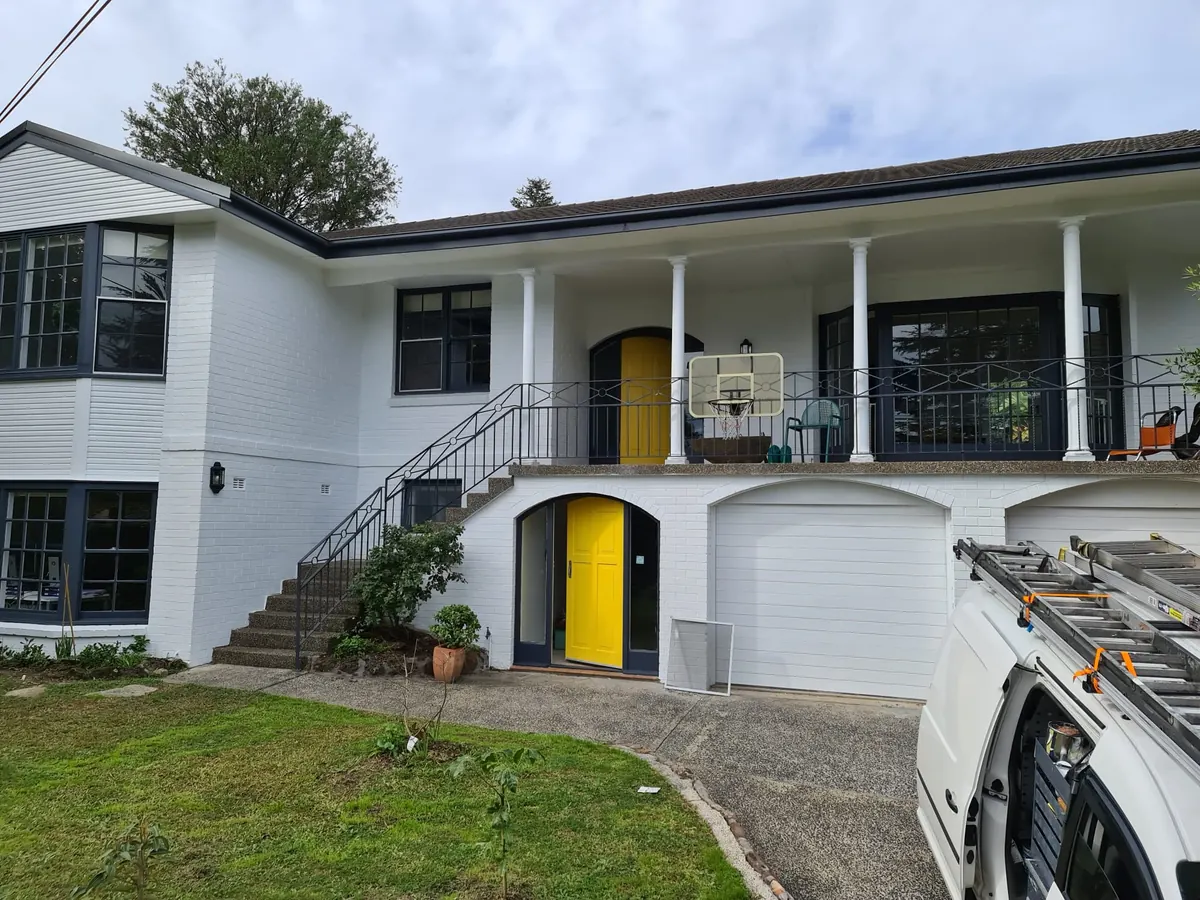
Paint is the cheapest protective layer on your house, and it is the only one that tells you clearly when it has stopped working. The trouble is that most of the signals are gradual enough to become invisible through daily familiarity. You stop noticing the chalky north wall because you have walked past it every day for six years. This is a walk-through of the ten signals worth looking for, what each one means about the surface underneath, and how urgently it needs attention.
1. Chalking on exterior walls
Rub your hand firmly along a sun-exposed exterior wall. If it comes away with a fine powdery residue the colour of the paint, that is chalking. Ultraviolet light has degraded the binder that holds the pigment in place, so the surface is literally shedding itself.
Chalking is the clearest single indicator that an exterior coating has reached the end of its protective life. It is not dangerous, and the wall will not fail tomorrow, but the film is thinning and its ability to shed water is diminishing. Importantly, you cannot paint over chalk. The surface must be washed back thoroughly first or the new coating will bond to loose powder rather than to the wall.
Urgency: plan a repaint within the next twelve months.
2. Peeling, flaking or blistering paint
This is the sign to take most seriously, particularly on timber. Peeling means the bond between coating and substrate has failed, and wherever the paint has lifted, water now reaches the surface underneath directly.
On exterior timber, weatherboards, fascia, window sills and door frames, that is a genuine problem. Moisture gets into end grain, timber swells and contracts, and rot follows. A weatherboard caught early needs a scrape, prime and recoat. The same board caught two winters later needs replacing, and replacement carpentry costs considerably more than painting.
Blistering, where paint bubbles away from the surface, usually means moisture is trapped beneath the film or the coating was applied to a damp or hot surface. Either way it needs investigation rather than a quick recoat.
Urgency: act now. This is the one that gets expensive if you wait.
3. Visible fading and colour loss
Fading is easy to miss because it happens uniformly across what you see every day. The diagnostic trick is to find a sheltered section of the same colour: under the eaves, behind a downpipe, inside a meter box recess, or on a south-facing wall. Compare it with the most exposed elevation.
If the difference is stark, the exposed coating has lost a meaningful share of its pigment. Across Sydney, north and west-facing walls take the heaviest UV load and fade first, sometimes two or three years ahead of the rest of the house. Dark and saturated colours show it soonest.
Urgency: cosmetic initially, but fading usually accompanies chalking, so treat it as a prompt to check for both.
4. Cracking, crazing and gaps
Fine cracking across a paint surface, sometimes called crazing or alligatoring, means the film has lost its flexibility and can no longer accommodate the movement of the material beneath it. Coatings flex with thermal expansion for years; eventually they stop.
Separately, look at the joints: where architraves meet render, where weatherboards meet corner mouldings, around window frames. Old caulk shrinks, hardens and splits, and those gaps are direct pathways for water into the wall cavity. Re-caulking is a routine part of any proper exterior repaint and one of the most valuable things it achieves.
Wider cracks in render or masonry that follow a consistent line, step diagonally, or open and close with the seasons are a different matter. Have a builder look at those before painting, because paint will not hold a moving crack closed.
Urgency: within six to twelve months for crazing and failed caulk.
5. Mould, mildew and dark staining
Dark grey, green or black patches appear most readily on shaded southern walls, under eaves, in bathrooms and in laundries. Sydney's humid summers create good conditions for it, and homes with heavy tree cover or poor airflow see it worst.
The critical point is that painting over mould achieves nothing. The growth must be treated with an appropriate solution, removed, and the surface allowed to dry before coating. Then the cause needs addressing: ventilation in a bathroom, drainage against a wall, or cutting back vegetation that keeps a wall permanently damp. Skip any of those steps and the mould reappears through the new paint inside a year.
Urgency: treat the growth promptly; schedule the repaint once the cause is fixed.
6. Interior marks that no longer clean off
Interior paint has a finite washable life. Early on, scuffs and fingerprints wipe away cleanly. Later, wiping starts to burnish the surface, leaving a shiny patch that looks worse than the mark did, or it lifts colour altogether.
Hallways, stairwells, the wall beside the back door and any room used by children go first. When cleaning is making things worse rather than better, the coating has exhausted its wash resistance. A fresh interior repaint with a quality washable low-sheen restores several years of cleanability.
Urgency: cosmetic, driven by how much it bothers you.
7. Yellowing trim and ceilings
Older oil-based enamels yellow with age, and they yellow fastest in rooms with the least natural light, which is why the inside of a wardrobe or a hallway cupboard door often looks noticeably creamier than the rest of the house. Ceilings yellow from cooking residue, candle and heater use, and general airborne grime.
The tell-tale moment is when you hold something genuinely white against the trim and the gap is obvious. Modern water-based enamels hold their whiteness far better, so repainting trim is usually a permanent improvement rather than a cycle.
Urgency: cosmetic, but it makes an outsized difference to how fresh a whole room looks.
8. Roof tiles or metal looking tired
Roofs are the most neglected painted surface on any house purely because nobody looks at them. Signs worth checking from the ground or from an upstairs window include faded and patchy colour, dark streaking, visible moss or lichen growth, and on metal roofs, rust starting at fixings, laps and cut edges.
A roof coating does real work beyond appearance: it sheds water, reduces moisture absorption into porous tiles, and a lighter colour reflects a meaningful amount of summer heat. Ridge capping that is cracked or crumbling needs repointing as part of the job. Our roof restoration and coating service covers the full sequence.
Urgency: within a year if rust or failing pointing is visible; otherwise plan it.
9. Rust on metalwork
Balustrades, gates, garage doors, window frames, gutters and downpipes all rust once their coating fails. Rust is progressive: it grows under the surrounding paint, lifting more of it, which exposes more metal.
This matters especially for homes near the water. Salt-laden air across the eastern beaches and the northern peninsula is corrosive, and metalwork there needs attention several years sooner than an equivalent property further inland. Treating rust properly means mechanical removal back to sound metal and a rust-inhibitive primer, not a coat of paint over the top.
Urgency: act early. Rust only ever gets more expensive.
10. It simply looks dated, or you are selling
Not every reason to repaint is about protection. Colour trends shift, and a scheme that felt current fifteen years ago now dates a home instantly, which matters if you are about to put it on the market.
Repainting is consistently one of the better-value pre-sale improvements because it changes how a property photographs and how it feels at an inspection, for a fraction of the cost of any renovation. The front elevation, the entry and the main living spaces deliver most of the benefit. If you are choosing new colours, our guide to selecting colours that age well is worth reading first.
Urgency: driven by your timeline.
Quick reference: what needs doing when
| Sign | What it indicates | Priority |
|---|---|---|
| Peeling on exterior timber | Water reaching bare timber | Immediate |
| Rust spreading on metalwork | Active corrosion under coating | Immediate |
| Rotten or soft timber | Decay already underway | Immediate |
| Mould growth | Moisture or ventilation issue | Within months |
| Failed caulk and open joints | Water entry pathway | Within months |
| Chalking | Coating at end of protective life | Within a year |
| Crazing and fine cracking | Film has lost flexibility | Within a year |
| Faded or streaked roof | Coating worn, tiles absorbing water | Within a year |
| Marks that will not clean | Wash resistance exhausted | When convenient |
| Fading, yellowing, dated colours | Cosmetic | When convenient |
How to do a ten-minute inspection
Twice a year, pick a bright day and walk the perimeter of your house slowly. It genuinely takes ten minutes.
- Touch the walls. Check for chalking on each elevation, not just the front.
- Press the timber. Push a thumbnail into window sills, the bottom of door frames and the lower weatherboards. Soft timber means decay.
- Look up. Fascia, barge boards and gutter lines fail first because they take the most water.
- Check the shaded side. The southern elevation is where mould appears.
- Inspect the joints. Run your eye along every junction between materials.
- Compare exposed and sheltered. The fading test described above.
- Glance at the roof. From the street and from an upstairs window if you have one.
Homes in different parts of greater Sydney age at different rates, and it is worth knowing which category yours falls into. Coastal properties contend with salt and humidity. Western and north-western suburbs deal with more extreme summer heat and greater thermal movement. Inner-city terraces are often older stock with lath and plaster, original timber joinery and party walls that trap moisture. You can see the regions our crews work across on the service areas page.
Why waiting costs more
Repainting a sound surface is straightforward: wash, minor prep, prime where needed, two coats. Repainting a failed surface involves scraping, extensive sanding, rot repairs, replacement timber, rust treatment and sometimes render patching before a brush is lifted. That extra preparation can easily double the labour on an exterior.
The economics are simple. A repaint scheduled at the right moment is a maintenance cost. A repaint deferred until the coating has failed becomes a repair job with a paint component attached. Our article on realistic repainting intervals for Sydney homes sets out the timeframes, and the materials we use are chosen specifically to push those intervals as long as the conditions allow.
Frequently Asked Questions
What is the most urgent sign that a house needs repainting?
Peeling or flaking paint on exterior timber. Once the coating lifts, water reaches bare timber directly and rot can begin within a season. A faded wall is cosmetic and can wait; exposed timber cannot, because the repair cost rises quickly once decay sets in.
What is chalking and is it serious?
Chalking is a fine powdery residue that comes off on your hand when you rub an exterior wall. It means UV has broken down the binder holding the pigment together, so the coating is at the end of its protective life. It is not an emergency, but it is a clear signal to plan a repaint.
Do hairline cracks in paint mean structural problems?
Usually not. Fine crazing in the paint film is normally age-related coating failure or movement in render. Wider cracks that follow a consistent line, step diagonally, or open and close seasonally deserve inspection by a builder before you paint over them.
Why does mould keep coming back after painting?
Because painting over mould does not kill it. The growth has to be treated and removed first, then the underlying cause addressed, whether that is poor ventilation, a leak or deep shade. Without that, spores survive under the new coating and reappear within months.
How faded is too faded?
Compare a sheltered section, such as under the eaves or behind a downpipe, with an exposed wall. If the difference is obvious to the eye, the exposed coating has lost a significant share of its pigment and is likely nearing the end of its useful life.
Should I repaint before selling my house?
A fresh, neutral repaint is one of the more cost-effective pre-sale improvements because it reads as a well-maintained home in photographs and at inspections. Focus on the front elevation, the entry and the main living areas rather than trying to do everything.
Can I just touch up the bad areas instead of repainting?
Spot repairs work when the surrounding coating is sound and the colour still matches, which is easiest on interiors. On a faded exterior, a patch will stand out against the weathered surrounding paint, so full-wall or full-elevation recoating usually looks far better.
How often should a Sydney home be repainted?
As a general guide, interior walls every seven to ten years, exterior render every eight to twelve, exterior timber every four to seven, and roofs every ten to fifteen. Coastal and heavily sun-exposed properties across Sydney sit at the shorter end of every one of those ranges.
Not sure what you are looking at?
If you have spotted something on this list and are not certain how serious it is, that is a reasonable thing to ask about. We are happy to walk the property with you, point out what is genuinely sound and what needs attention, and tell you honestly if the answer is to leave it another two years. Not every inspection needs to end in a quote.
Want an honest assessment of your home? Book a free inspection and quote and we will go surface by surface with you. We handle exterior repaints and full interior work, and our commercial team does the same for shops, offices and strata properties.