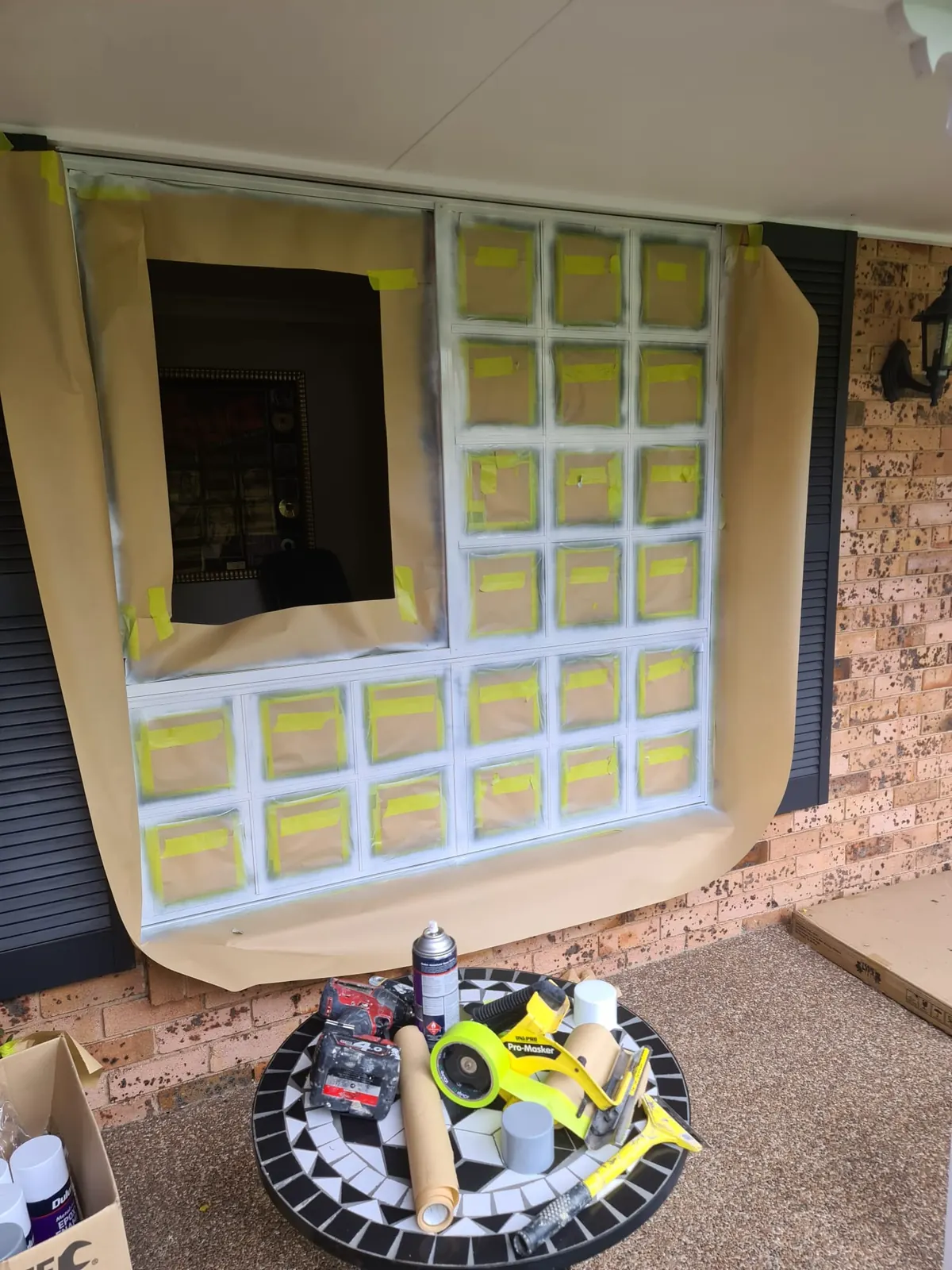
Interior and exterior paints may look similar, but they are designed to handle very different conditions. Using the right paint for each environment helps achieve a more durable, better-looking finish and ensures the coating performs as intended. While both types use similar basic ingredients, their formulations are tailored to the demands of the surface and surroundings.
Similar Ingredients, Different Formulations
Most paints contain four key components: pigments for colour, binders that help the coating adhere and form a durable film, liquids that allow the paint to be applied, and additives that improve performance. The balance of these ingredients changes between interior and exterior products to suit the conditions each coating needs to withstand.
What Exterior Paint Needs to Withstand
Exterior paint needs to withstand constant exposure to the elements. In Sydney, strong UV, heavy rain, humidity, coastal salt and changing temperatures can all affect the coating over time. A quality exterior paint system is designed to handle these conditions while maintaining its protection and appearance.
- Flexible binders. Exterior coatings are formulated to accommodate natural movement in timber, render and masonry caused by changes in temperature and moisture, helping reduce cracking and premature failure.
- UV resistance. UV-resistant additives and stable pigments help exterior colours retain their appearance and reduce fading and surface degradation caused by prolonged sun exposure.
- Mould and mildew resistance. Exterior coatings can include additives designed to help resist mould and mildew growth, which is particularly important in humid or damp conditions.
- Water resistance. Once cured, exterior paint helps repel rain and moisture while allowing the coating system to manage moisture within the substrate appropriately.
For the preparation, coating selection and access involved in an outdoor repaint, see our exterior painting service in Sydney.
What Interior Paint Is Designed For
Indoors, paint is protected from the weather, allowing the formulation to focus on durability, appearance, easy cleaning and the comfort of the space.
- Easy cleaning. Quality interior paints are designed to withstand regular wiping and washing, making them practical for busy areas such as hallways, kitchens and living spaces.
- Low odour and low emissions. Interior paints can be formulated to minimise odour and emissions, helping create a more comfortable environment while the paint is being applied and drying.
- A refined finish. Interior paint is available in a range of sheen levels, from flat finishes for ceilings to low-sheen walls and semi-gloss finishes for trims and detailed areas.
- Smooth application. Interior coatings are designed to flow and level evenly, helping create a consistent finish with fewer visible brush and roller marks.
Our interior painting service explains how we prepare walls, ceilings and trim and choose finishes for different rooms.
Interior vs exterior at a glance
| Property | Interior paint | Exterior paint |
|---|---|---|
| Main enemy | Scuffs and washing | Sun, rain, salt, movement |
| Resin | Rigid, smooth finish | Flexible, weatherproof |
| Mould inhibitors | Light | Heavy |
| UV protection | Minimal | Strong |
| Odour and emissions | Low, cabin-friendly | Higher, ventilated use |
Why Interior and Exterior Paint Should Not Be Swapped
Interior and exterior paints are formulated for very different environments. Exterior products are designed to handle UV exposure, moisture and changing temperatures, while interior paints are formulated for the conditions found inside a home. Using the wrong product can lead to poor performance, premature wear and an unsatisfactory finish.
What About Covered and Semi-Outdoor Areas?
Some areas sit between indoor and outdoor conditions and need to be assessed carefully. Bathrooms and laundries experience regular moisture and benefit from washable, moisture-resistant interior products. Garages, eaves, verandahs and other covered outdoor areas can still experience temperature changes, airflow and humidity, so an exterior-grade coating may be more suitable.
What Happens When You Use the Wrong One
"Not interchangeable" is easy to say and easy to ignore. It is worth understanding what actually goes wrong, because the two mistakes fail in completely different ways and on completely different timescales.
Interior paint used outside
This is the more damaging error and the more common one, usually on a shed, a fence, a garage door or an eave where a half-tin of leftover wall paint seemed like a sensible use of materials. The film is formulated to be rigid and smooth, not flexible, so it cannot accommodate the daily expansion and contraction of timber and render. It cracks, and once it cracks water gets behind it and it peels in sheets. The pigments and binder have little UV stabilisation, so the colour fades quickly and the surface chalks. There are no meaningful mould inhibitors, so growth appears on any shaded section. In Sydney conditions, visible failure often starts inside twelve months and the surface underneath has usually been exposed to water by then.
Exterior paint used inside
Less destructive but still a poor outcome. Exterior formulations carry higher levels of additives, including biocides and mould inhibitors, so odour and emissions during application and curing are higher and linger longer in a closed room. The flexible resin stays softer, which means it can remain slightly tacky in humid weather and is prone to blocking, where a painted door sticks to its frame. The film picks up and holds dirt more readily. The sheen range is not designed for interior aesthetics, and the finish often looks subtly wrong, particularly on ceilings and trim. None of it is dangerous once cured, but you will not get the washable, refined result an interior product delivers.
| Mistake | First visible sign | Typical timeframe | Consequence |
|---|---|---|---|
| Interior paint on exterior timber | Fine cracking, then peeling at edges | 6 to 18 months | Full strip back and recoat, possible timber repair |
| Interior paint on exterior render | Fading and chalking | 1 to 2 years | Wash back and recoat with a correct system |
| Exterior paint on interior walls | Lingering odour, dirt pickup | Immediately, then ongoing | Usually liveable, but a poor finish |
| Exterior paint on interior doors | Tackiness, sticking to frames | Weeks, worse in humidity | Sand back and recoat with an enamel |
The Categories Between Interior and Exterior
The interior and exterior labels cover most situations, but a real Sydney house has surfaces that do not fall neatly into either. These are worth knowing by name, because asking for the right category is half the job.
- Interior and exterior products. Some manufacturers produce coatings rated for both, typically trim enamels and certain masonry paints. These are genuinely dual-purpose rather than a compromise, and are useful on surfaces that cross the boundary such as a doorway or a window reveal.
- Kitchen, bathroom and laundry paints. Interior products with elevated moisture and mould resistance and a tighter film. The correct answer for wet areas, rather than reaching for an exterior paint because it resists mould.
- Trim enamels. Water-based enamels for doors, skirtings and architraves. Harder and more blocking-resistant than wall paint, available in satin, semi-gloss and gloss, and available in interior and exterior grades.
- Roof membranes. Not exterior wall paint at all. Heavier-build flexible coatings designed for foot traffic, ponding water and extreme surface temperatures. Wall paint on a roof fails fast, which is why roof coating is a separate system.
- Metal and galvanised systems. Require a matched primer. Bare galvanised steel and aluminium need an etch or specialist primer before any topcoat, or the coating simply peels off the slick surface.
- Floor and paving coatings. Abrasion-resistant systems for garage floors and concrete. Ordinary paint of either type wears through under tyres and foot traffic within months.
Getting the semi-outdoor calls right
The grey areas around a Sydney home follow a reasonably consistent logic: if a surface sees weather, condensation, or significant temperature swing, treat it as exterior.
- Eaves and soffits. Exterior. They are shaded and sheltered, but they see humidity, airflow and mould, and they are part of the exterior coating system.
- Enclosed garages. Interior walls are usually fine indoors, but the garage door and any wall exposed to driving rain through an open door should be exterior.
- Verandahs and covered decks. Exterior. Wind-driven rain reaches them and they experience the full temperature range.
- Window reveals and door jambs. Exterior grade on the outside face, interior on the inside, with the change falling at the rebate where the door or sash closes.
- Unlined roof spaces and subfloors. Rarely painted, but if coated, exterior grade because of the humidity and temperature extremes.
- Bathrooms and laundries. Interior, using a dedicated wet-area product rather than an exterior one.
Primers: Where the Real Difference Lives
Most homeowners compare topcoats. Painters compare primers, because the primer is what determines whether the system stays attached to the building. Interior and exterior primers are not interchangeable either, and the range is wider than most people expect: sealer undercoats for new plasterboard, oil-based or shellac stain blockers for water marks and tannin bleed, adhesion primers for glossy or difficult surfaces, masonry sealers for fresh render, rust-inhibitive primers for ferrous metal, and etch primers for galvanised steel and aluminium.
Choosing the correct primer for the substrate is a more consequential decision than choosing between two good topcoat brands, and it is the step most often skipped on a cheap quote. The related question of how many coats go over it is covered in our guide to coat counts by surface, and the products we specify for each substrate are set out on our materials page.
Reading a product data sheet
Every Australian paint product has a technical data sheet, usually a free download from the manufacturer, and it answers the questions a tin label does not. Four lines are worth finding: the approved substrates, the recommended primer, the spread rate in square metres per litre, and the minimum recoat time. If a painter proposes a product, those four lines tell you whether the specification is coherent. A topcoat applied at a much higher spread rate than the sheet allows is being stretched, and a product used on a substrate the sheet does not list is being used on hope. Choosing between well-regarded brands matters far less, as our comparison of Australian paint brands explains.
Frequently Asked Questions
Can I use interior paint outside?
No. Interior paint lacks the flexible resin, UV stabilisers and mould inhibitors that outdoor exposure demands. In Sydney conditions it typically starts cracking and peeling within six to eighteen months on timber, and fades and chalks on render within a couple of years. By the time it looks bad, water has usually already reached the surface underneath.
Can I use exterior paint inside?
You can, but you should not. Exterior formulations carry higher additive and biocide levels, so odour and emissions linger longer in a closed room. The softer, more flexible film picks up dirt, can stay tacky in humid weather, and may cause painted doors to stick to their frames. The finish will not be as washable or refined as an interior product.
What is the actual difference between interior and exterior paint?
Both use pigment, binder, liquid and additives, but the balance differs. Exterior paint uses a flexible resin to handle substrate movement, plus UV stabilisers and heavy mould inhibitors. Interior paint uses a harder, smoother-levelling resin optimised for washability, a refined finish and low odour, since it never has to face weather.
What paint should I use on eaves and soffits?
Exterior grade, even though eaves are shaded and sheltered from direct rain. They still experience humidity, airflow and temperature swings, and shaded eaves are one of the most common places for mould to appear on a Sydney home. They also form part of the exterior coating system, so matching products keeps the finish consistent.
Do bathrooms need special paint?
They need a dedicated interior wet-area product with elevated moisture and mould resistance, not an exterior paint. Reaching for exterior paint because it resists mould brings the odour and finish problems with it. Pair the right product with good ventilation, since paint alone will not solve a bathroom that stays damp for hours.
Is exterior paint more expensive than interior paint?
Generally yes per litre, because of the flexible resins, UV stabilisers and higher additive loading. The larger cost difference on a job is not the paint though, it is the labour: exterior work involves more washing, more preparation, more masking and often access equipment. Materials are a minority share of any exterior quote.
Can I use exterior wall paint on my roof?
No. Roof coatings are a separate system built as heavier-build flexible membranes designed for foot traffic, ponding water and very high surface temperatures. Wall paint applied to tiles or metal roofing fails quickly. Roofs also need their own primers, particularly on bare or rusted metal and on porous unsealed tiles.
Which matters more, the topcoat or the primer?
For adhesion and lifespan, the primer, and it is the step most often skipped on a cheap quote. The right primer for the substrate, whether that is a sealer for new plasterboard, a stain blocker, a masonry sealer, a rust-inhibitive primer or an etch primer for galvanised metal, does more for durability than choosing between two good topcoat brands.
Choosing the Right Paint Is Only the Beginning
Even the best paint will struggle on a poorly prepared surface. Proper cleaning, sanding, filling and priming are essential for achieving a smooth, durable finish. The preparation process should be matched to the surface, location and type of coating being applied.
Not sure which paint is right for your project? Get in touch for a free quote and straightforward advice. We can help you choose the appropriate product for each surface, prepare it correctly and achieve a durable finish suited to your home and Sydney's conditions.